All the rules of production that were written in stone have been disrupted in very interesting, very exciting, and mildly terrifying ways. If you can compartmentalize how weird it is, this is the most exciting time ever to be an indie creative.
The truth is that educational games cannot compete head-on with Fortnite or Minecraft or Candy Crush. Those games are built primarily to entertain. Learning games have an extra hurdle, which is that the students need to learn something specific. So I try to make my games as cool and edgy as I possibly can without compromising on the learning: about as cool as you can be and not be Minecraft.
In a recent Authority Magazine interview on the future of gaming, I reflected on nearly 30 years of media production, going back to the intensive production program at UT Austin in 1997, building the Webby-winning studio GameZombie TV at Indiana University, and serving as founding creative director of the venture-backed learning game startup Galxyz in Mountain View. Across projects ranging from Dr. Sara: Disease Detective and History Adventures: Empires & Interconnections to Plague of Athens VR and Chaos Corp, here are the five things you need to know to create a successful learning game.
1. The Core Loop Has to Stand on Its Own
The bones of the game need to be fun. Strip the idea down to a bare-bones prototype. If you can test it on paper, test it there. If the game in its paper prototype form is not fun to play, there is no there there. No matter how much you polish the story or how sophisticated the learning theory, the game will be dead on arrival. This is probably the single most important concept in making a game.
2. Give Players Meaningful Choices
When you offer a choice, the player needs to feel it has an impact. Otherwise, they realize it is all a sham and lose interest. That is the point of Sid Meier's famous insight: "a game is a series of interesting decisions."
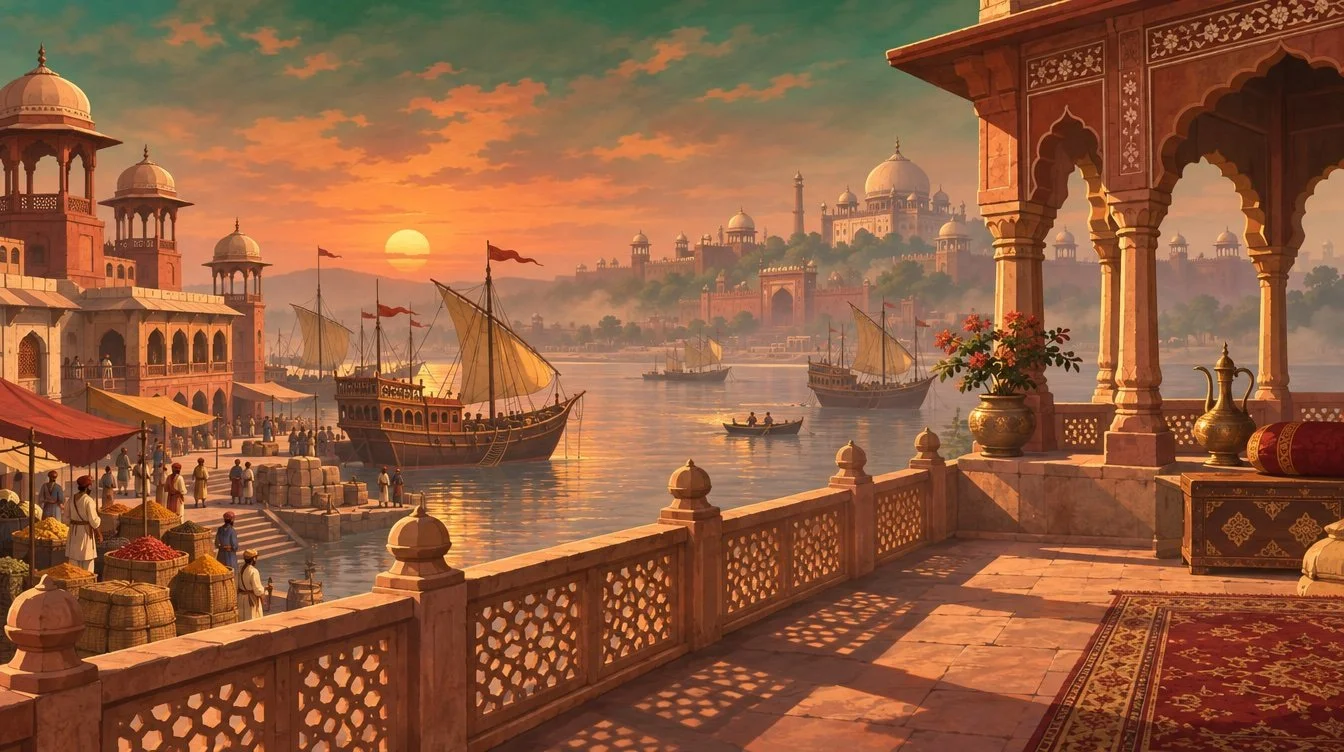
In Empires & Interconnections, you follow six characters living around the world between 1450 and 1750. Luis is a Spanish adventurer in Peru seeking glory and gold. Ioannina is in Constantinople during the Ottoman siege, with the walls crumbling around her. Jonas is a pirate in the Caribbean. In the Mughal India chapter, Arun is a zamindar landowner as Mughal power declines and the British East India Company rises. He has to decide where his loyalties lie. That difficult choice gives the history a personal dimension. The flip side is that alternative paths create extra work, including material a player may never see. With a tight indie budget, that is a big decision. You have to think carefully about which choices you offer and how the game responds.

3. Keep the Challenge Growing With the Player's Ability
The great game designers keep the player challenged right at the precipice of their ability. As your character increases in power, the enemies increase in power, and most importantly, your expertise grows just as the difficulty grows, so you are in a perpetual state of optimal challenge. If it is too hard, you quit; if it is too easy, you also quit. Get that balance right and the player keeps coming back.
There is a connection here to Vygotsky's zone of proximal development: the gap between what a learner can do independently and what they can do with guidance. James Paul Gee describes good games as "pleasantly frustrating," while Raph Koster connects fun with learning and mastering patterns. The challenge stretches you, and the game gives you the support and feedback to grow into it.
4. Camera Orientation Is Huge
First person, third person, top-down, isometric, fixed camera, 2D side-scroller: where you put the camera is one of the biggest decisions you make. A successful game creates a world or experience you want to keep exploring. I love Assassin's Creed Shadows because sometimes I just want to ride my horse through sixteenth-century Japan, unlock viewpoints, and get into misadventures, totally unconcerned with the main story. Watching my character move through the landscape is a huge part of the pleasure, and the codex gently nudges your curiosity without forcing anything down your throat.
In Plague of Athens VR, the intention is to put you inside the physician's experience as you walk in the footsteps of a young doctor confronting a terrible human tragedy in 430 BCE. We built an entire 3D world so the learner could encounter those decisions from inside the situation. Where you place the player in relation to the world changes how they encounter it.

5. Explore the Art Direction Before Committing to Production, and Never Outsource Taste
Spend time ruminating on the art style. Once you are deep into production, changing direction becomes difficult. When we made Empires & Interconnections, employing several artists helped speed up production, but their styles differed. I had to bring them as close together as I could. That experience made the importance of a coherent visual direction very clear. Generative tools now let you explore many more treatments before committing. Use that opportunity to figure out what serves the project.
The new tools let motivated teachers and indie teams prototype ideas much faster, developing a concept, creating imagery and sound, and building a web-based game with far fewer production barriers. Yet it is not a magical solution. You still need design literacy to critique what comes back. You can never outsource your taste. The moment you outsource taste, there is nothing left.
If a coding tool returns an interesting prototype, you do not say, "Okay, perfect, print it." You play it top to bottom, repeatedly. Write notes. Compare the experience with your original goal, and consider what new opportunities have emerged. Revise it and play it again. That is the real job of the game designer: working through the rules, the logic, and the experience.
Read the full interview: Check out the complete feature in Authority Magazine: "On The Future Of Gaming", and explore our playable worlds across Empires & Interconnections, Plague of Athens VR, and Dr. Sara: Disease Detective.
Spencer Striker, PhD, is a digital learning designer, producer, and professor of digital media design creating interactive history, game-based learning, and AI-animated storytelling.
